

THE NEUROTRANSMITTER
Brain and spine health, minus the medical jargon
Dr. Betsy Grunch | Ladyspinedoc · October 24, 2026
Why breast cancer can show up in the spine years after treatment, which back pain needs a call today, and how we protect your spinal cord.
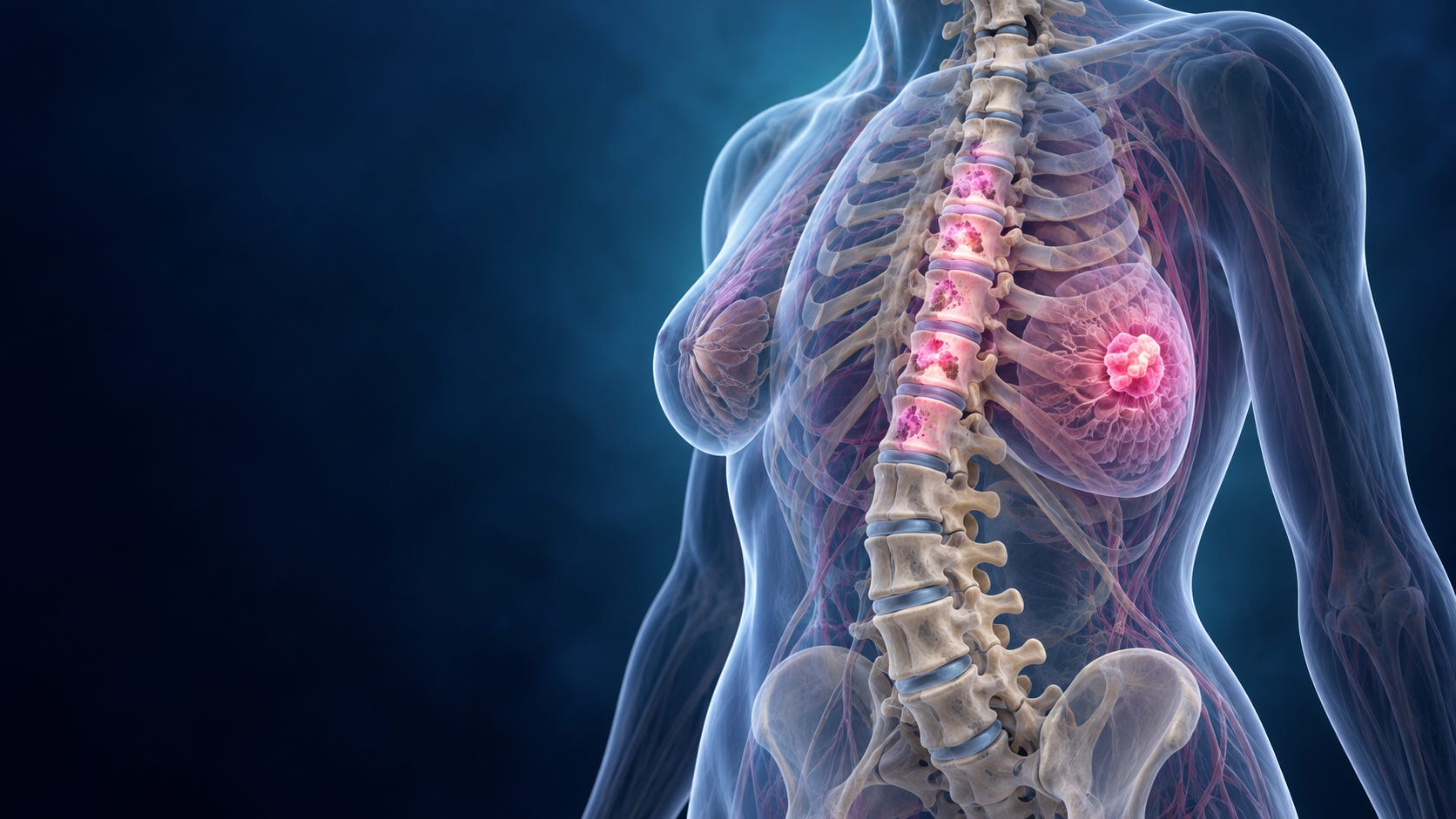
When someone comes to see me for back pain, I ask a lot of questions. Where does it hurt? When did it start? Does it wake you up at night? And one more that surprises people: Have you ever had cancer?
Sometimes the answer is, “Well, I had breast cancer years ago, but I’m fine now.” And most of the time, they are fine. Most back pain is a muscle, a disc, or arthritis. But breast cancer can come back in the bones of the spine, sometimes many years after treatment, and back pain is often the first clue.
October is Breast Cancer Awareness Month, and October 13 was Metastatic Breast Cancer Awareness Day. So this week I want to talk about the part of the breast cancer story that lands in my world: the spine. I’ll show you which back pain deserves a closer look, which symptoms mean you go today, and what we can do about it.
New here? The Neurotransmitter is free every week. Subscribe so you never miss an issue.
Why Breast Cancer Likes Your Spine
When cancer spreads from where it started to somewhere else in the body, we call it metastatic cancer. Breast cancer that spreads to the spine is still breast cancer. Under a microscope, those cells look like breast cells, and we treat them with breast cancer medicines.
Back in 1889, an English surgeon named Stephen Paget noticed that cancer doesn’t spread at random. He compared it to seeds and soil. A plant throws seeds everywhere, but they only grow where the soil suits them. Breast cancer cells travel through the blood, and bone turns out to be very good soil for them.
Bone is the most common place breast cancer spreads. In a classic study of women who died of breast cancer, about 7 in 10 (69%) had cancer in their bones [3]. And within the skeleton, the spine is one of its favorite spots. In a study of 984 women with breast cancer in their bones, the thoracic spine (mid back) and lumbar spine (low back) together made up about a quarter of all the bone spots found, right alongside the ribs and pelvis [4].
Why the spine? Your vertebrae are full of bone marrow and have a rich blood supply. Cells floating through the bloodstream have plenty of chances to settle there.
Who This Affects
Breast cancer is common. The American Cancer Society estimates about 321,910 women in the U.S. will be diagnosed with invasive breast cancer in 2026, and there are more than 4 million breast cancer survivors in this country [1]. Men get breast cancer too, though far less often.
The number of people living with metastatic breast cancer is growing, partly because treatment keeps getting better and people are living longer with it. Researchers at the National Cancer Institute projected about 169,000 women in the U.S. would be living with metastatic breast cancer in 2025 [2].
Some breast cancers can come back long after treatment ends. A huge analysis followed more than 60,000 women with estrogen receptor–positive breast cancer (the most common type) who finished 5 years of hormone therapy. Their risk of the cancer showing up somewhere else in the body held steady year after year, all the way out to 20 years after diagnosis. Over those 15 years, the risk ranged from 10% to 41%, depending mostly on how big the original tumor was and how many lymph nodes it had reached [5].
Please don’t read that and panic. Plenty of survivors never have their cancer come back, and most back pain in survivors is the same ordinary back pain everyone else gets. The lesson is simpler: your cancer history matters forever, so make sure every doctor who examines your back knows about it.
What’s Happening Inside the Bone
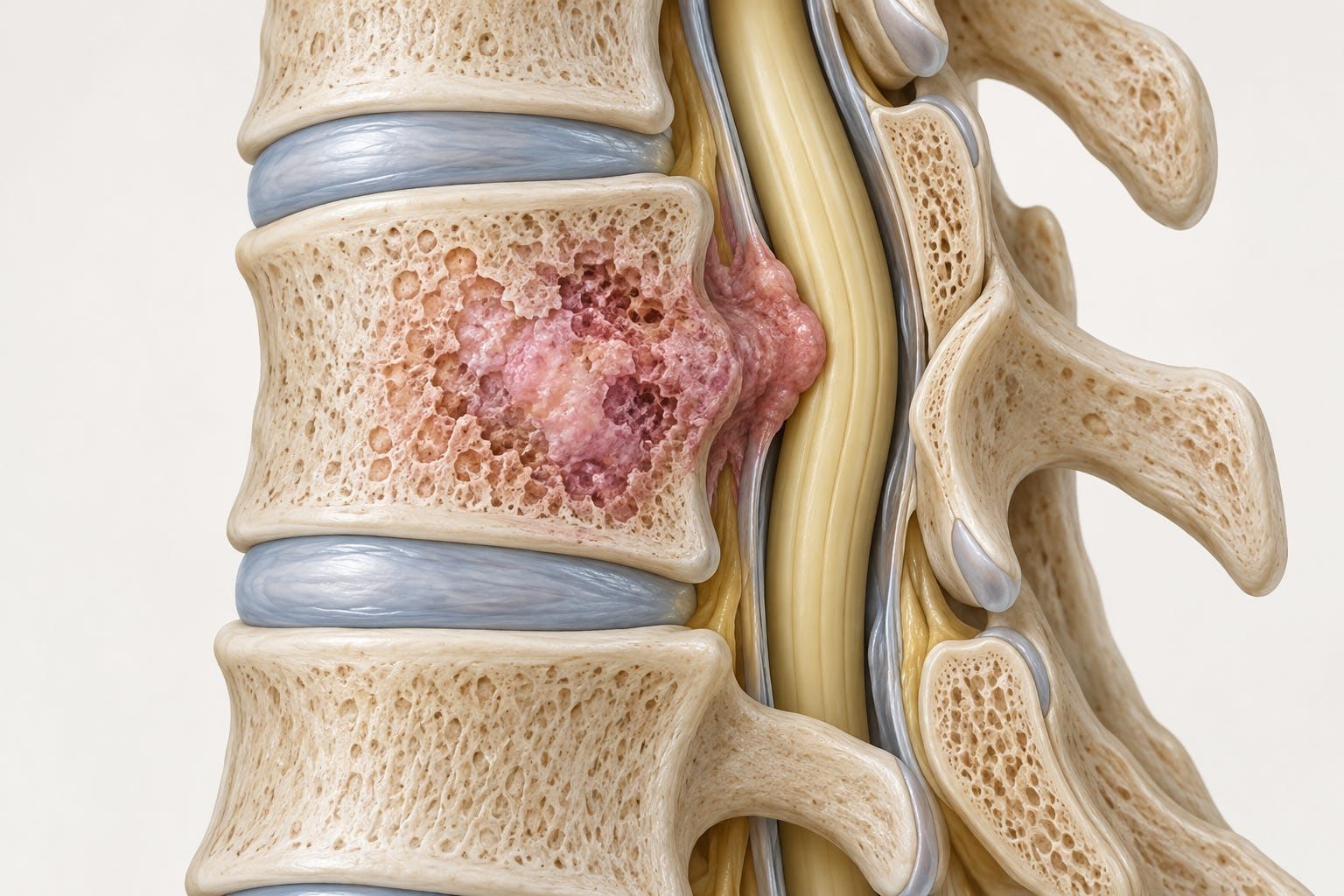
Healthy bone is always being remodeled. Some cells break down old bone, and others build new bone. Breast cancer cells hijack that process. In most cases they push the “break down” side into overdrive, which leaves holes and weak spots in the vertebra.
That causes a few problems:
Pain. The tumor stretches the lining of the bone and irritates nearby nerves. This is usually the first symptom.
Fractures. A weakened vertebra can collapse, sometimes from something as small as a cough or lifting a grocery bag.
Spinal cord compression. If the tumor or a collapsed piece of bone pushes backward into the spinal canal, it can squeeze the spinal cord or nerves. This is called metastatic spinal cord compression (MSCC), and it’s an emergency.
High calcium. As bone breaks down, calcium can spill into the blood. That can make you very thirsty, constipated, tired, or confused.
Cancer that spreads to the spine shows up most often in the thoracic spine, the mid back, which accounts for about 70% of cases. And breast cancer is one of the most common sources of spinal cord compression, behind about 1 in 4 cases [7].
Know someone dealing with this? Send this their way.
The Back Pain That Deserves a Closer Look
Ordinary back pain usually starts after you do something, like moving furniture or a long weekend of yard work. It tends to ease with rest and gets better over a few weeks.
Pain from cancer in the spine behaves differently. The UK’s National Institute for Health and Care Excellence (NICE) lists these warning signs for spinal metastases [6]:
Back pain that is severe, keeps getting worse, or won’t let up
Pain that’s worse when you stand, sit, or move
Pain that’s worse when you cough, sneeze, or strain on the toilet
Pain at night that keeps you from sleeping
A spot on your spine that’s tender when pressed
If you have a history of breast cancer and your back pain fits any of these, call your oncologist or doctor this week and tell them about your cancer history. NICE recommends an MRI within one week for people with suspected spinal metastases who don’t have nerve symptoms [6].
See a doctor right away (call 911 or go to the ER) if you have back pain plus any of these [6]:
New weakness in your legs, or your legs feel heavy or wobbly
Trouble walking or more stumbling than usual
New numbness or tingling in your legs, belly, or chest
Pain that wraps around your chest or belly like a band, or shoots down your legs
Trouble controlling your bladder or bowels, or numbness around your groin or inner thighs
These are the signs that the spinal cord or nerves may be getting squeezed. For suspected spinal cord compression, NICE recommends an MRI of the whole spine within 24 hours [6]. Don’t wait for your next scheduled appointment.
I push hard on this for a reason. How well someone does depends a lot on how much nerve damage there is, and for how long, when treatment starts [7]. Nerve damage caught early can often be reversed. Nerve damage that’s been there for days often can’t.
How We Find It and Treat It
The test of choice is an MRI of the spine. It shows the bone, the spinal cord, and the nerves, and it can tell a cancer spot from a disc problem or an infection. If you have breast cancer and new nerve symptoms, the whole spine should be scanned, because there can be more than one spot.
Treatment is a team sport. In my world, that usually means me, a radiation oncologist, your medical oncologist, and sometimes a pain specialist. The options usually run from least to most invasive.
Treating the cancer itself
Hormone therapy, targeted drugs, and chemotherapy all work throughout the body, including the spine. Breast cancer often responds well, and these medicines are the backbone of treatment for metastatic disease.
Protecting the bones
Medicines called bone-modifying agents, like zoledronic acid (given by IV) or denosumab (a shot), slow down bone breakdown. The American Society of Clinical Oncology recommends them for people with breast cancer that has spread to the bone [9]. They help lower the risk of fractures and other bone problems. They’re not a substitute for pain treatment, though [9]. Because they carry a small risk of jaw bone problems, get a dental checkup before you start.
Radiation
Radiation is very good at shrinking tumors and easing bone pain. For spinal cord compression when surgery isn’t the right fit, NICE recommends starting radiation within 24 hours [6]. A newer, very focused type called stereotactic body radiotherapy (SBRT) delivers high doses to the tumor while sparing the cord. It may be considered for people with a good outlook or only a few spots in the spine [6].
Surgery
Surgery comes in when the spinal cord is being squeezed or the spine is unstable. A landmark trial by Patchell and colleagues compared surgery plus radiation with radiation alone for spinal cord compression from cancer. After treatment, 84% of the surgery group could walk, compared with 57% of the radiation-only group. And the surgery group kept walking much longer: a median of 122 days versus 13 days [8].
Not everyone is a surgical candidate. Your overall health, how many spots there are, and how well the cancer is responding all go into that decision. When the spine is unstable but surgery isn’t a good option, a brace can help [6]. For some fractures, we can inject bone cement through a needle to stabilize the bone.
What You Can Do
If you’re a breast cancer survivor, or you love one, here’s where I’d start:
Tell every doctor about your cancer history, even if it was 20 years ago. Make it the first thing you say when you come in for back pain.
Know your warning signs and who to call. NICE recommends that people with cancer be told which symptoms to watch for and who to contact if they show up [6]. If no one has told you, ask your oncology team for a name and a number.
Keep track of new pain. Write down when it started, what makes it worse, and whether it wakes you up. That note is gold at an appointment.
Don’t sit on leg symptoms. New weakness, numbness, or bladder changes mean you go today.
Take care of your mouth if you’re on bone medicine. Regular dental visits matter.
Keep moving, safely. Ask your team or a physical therapist which activities are safe for your spine right now.
Questions to ask your doctor:
Based on my original cancer, what is my risk of it coming back in my bones?
Which symptoms should make me call you, and which mean I go to the ER?
Who do I call after hours?
If I have back pain that won’t go away, how soon should I get an MRI?
If the cancer is in my bones, should I be on a bone-modifying medicine?
Key Takeaways
Most back pain isn’t cancer, but a history of breast cancer, even decades ago, changes how back pain should be checked.
Bone is the most common place breast cancer spreads, and the spine is one of its favorite spots [3][4].
Back pain that keeps getting worse, hurts at night, or is worse when you cough or strain deserves a call to your doctor this week [6].
Back pain plus new leg weakness, numbness, trouble walking, or bladder or bowel changes is an emergency. Go today [6].
Treatment works best when it starts early, and it can include cancer medicines, bone-protecting drugs, radiation, and surgery [6][8][9].
Before You Go
If you remember one thing from this issue, make it this: your cancer history belongs in every conversation about your back. Say it out loud, every time.
And if you’re living with metastatic breast cancer right now, you’re not doing this alone. There’s a whole team ready to protect your spine and keep you moving, and you deserve to have them in your corner.
I’d love to hear from you. Hit reply or leave a comment and tell me what you wish someone had told you about breast cancer and your bones. Your questions shape what I write next.
Why there’s a paid subscription
The Neurotransmitter is free to read. If you choose to become a paid subscriber, your subscription helps support Kids’ Chance of Georgia and the Betty Uriegas Memorial Scholarship.
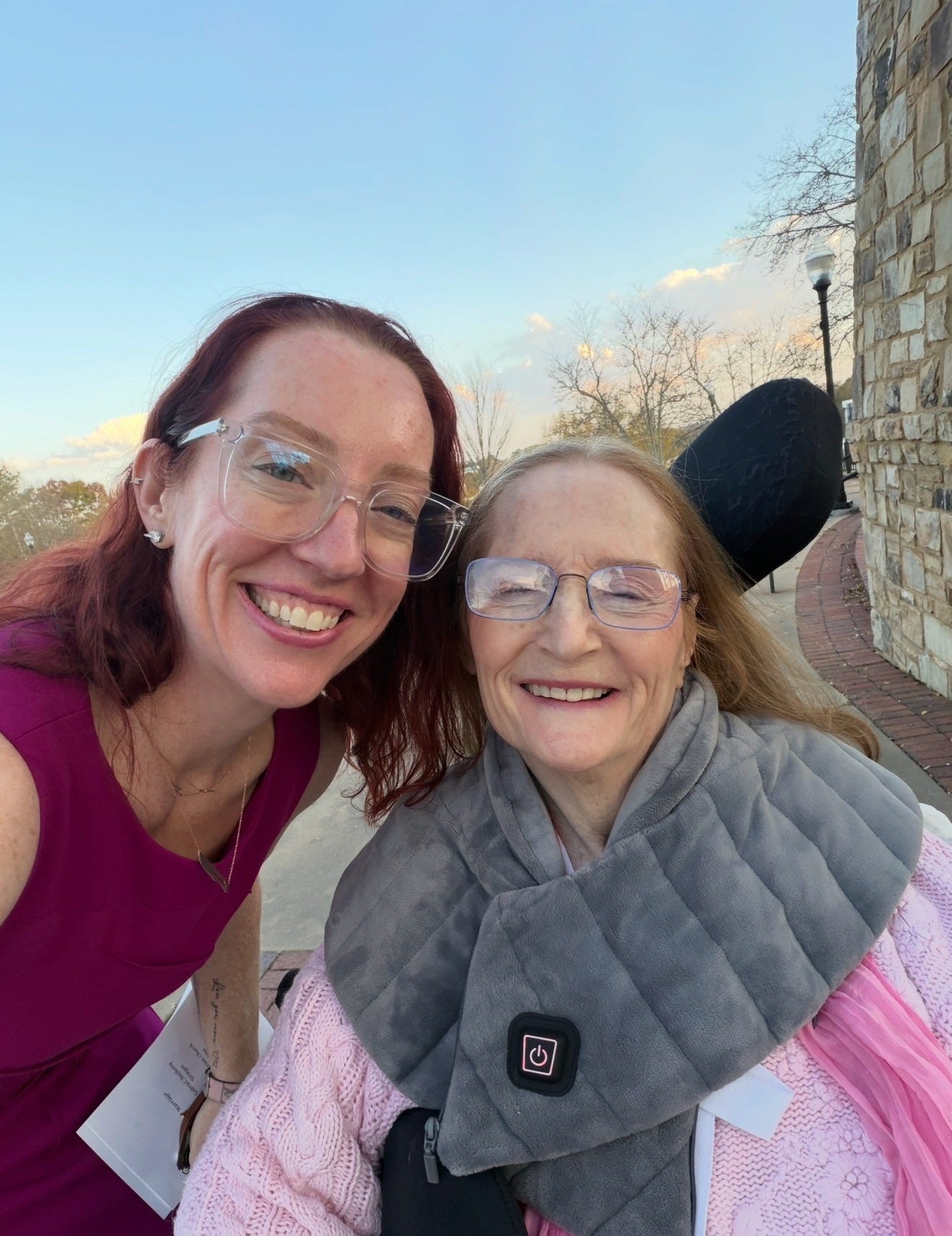
Kids’ Chance of Georgia gives college and technical-school scholarships to the children of Georgia workers who were seriously, catastrophically, or fatally injured on the job. I know what that help means, because I was one of those kids. My mother, Betty Uriegas, was a police officer who suffered a spinal cord injury in the line of duty when I was 14. That injury is why I became a neurosurgeon, and a Kids’ Chance scholarship helped me get there.
My mom was strong, hardheaded, and kind. This scholarship carries her name so another child of an injured worker gets the same chance I did. Your paid subscription is how we keep that going.
Are you a breast cancer survivor, or do you love one? Did anyone ever tell you which back symptoms to watch for? Tell me in the comments.
References
American Cancer Society. How common is breast cancer? Breast cancer statistics. Accessed October 23, 2026. https://www.cancer.org/cancer/types/breast-cancer/about/how-common-is-breast-cancer.html
Gallicchio L, Devasia TP, Tonorezos E, Mollica MA, Mariotto A. Estimation of the number of individuals living with metastatic cancer in the United States. J Natl Cancer Inst. 2022;114(11):1476-1483. doi:10.1093/jnci/djac158
Coleman RE, Rubens RD. The clinical course of bone metastases from breast cancer. Br J Cancer. 1987;55(1):61-66. doi:10.1038/bjc.1987.13
Nie H, Yuan Y, Li J, et al. Occurrence and distribution of bone metastases in 984 metastatic breast cancer patients. Transl Breast Cancer Res. 2021;2:4. doi:10.21037/tbcr-20-64
Pan H, Gray R, Braybrooke J, et al. 20-year risks of breast-cancer recurrence after stopping endocrine therapy at 5 years. N Engl J Med. 2017;377(19):1836-1846. doi:10.1056/NEJMoa1701830
National Institute for Health and Care Excellence (NICE). Spinal metastases and metastatic spinal cord compression. NICE guideline NG234. 2023. https://www.nice.org.uk/guidance/ng234
Vavourakis M, Sakellariou E, Galanis A, et al. Comprehensive insights into metastasis-associated spinal cord compression: pathophysiology, diagnosis, treatment, and prognosis: a state-of-the-art systematic review. J Clin Med. 2024;13(12):3590. doi:10.3390/jcm13123590
Patchell RA, Tibbs PA, Regine WF, et al. Direct decompressive surgical resection in the treatment of spinal cord compression caused by metastatic cancer: a randomised trial. Lancet. 2005;366(9486):643-648. doi:10.1016/S0140-6736(05)66954-1
Van Poznak C, Somerfield MR, Barlow WE, et al. Role of bone-modifying agents in metastatic breast cancer: an American Society of Clinical Oncology–Cancer Care Ontario focused guideline update. J Clin Oncol. 2017;35(35):3978-3986. doi:10.1200/JCO.2017.75.4614
Disclaimer
This newsletter is for informational and educational purposes only and is not medical advice. Reading it does not create a doctor–patient relationship, and it is not a substitute for individualized diagnosis or treatment from a licensed physician or qualified healthcare provider who knows your history. Please talk with your own doctor about your symptoms, medications, or health decisions, and never ignore professional advice or delay seeking care because of something you read here. If you think you are having a medical emergency, call 911 or go to the nearest emergency department right away.
Take care of yourself, and I’ll see you next week!

I’ve got your back,
Betsy Grunch, MD, FAANS, FCNS, FACS
Board-Certified Neurosurgeon | Ladyspinedoc
There is an older name for the gap behind "I had breast cancer years ago, but I'm fine now": the 2006 Institute of Medicine report Lost in Transition, which recommended that every patient finishing primary treatment get a care summary and follow-up plan. Pan's data give a reason to keep that page for good, since late distant recurrence tracks the original tumor size and nodal status, details that are easy to lose over twenty years. A wallet card with tumor size, node count, receptor status and year of diagnosis would let whoever sees the back pain first weigh it the way you describe.
My mother-in-law has been in the hospital now for five-six weeks. She has Adenocarcinoma-bone cancer stage 4. She has a mastectomy last year and did not have chemotherapy or radiation. She has been on a aromatase inhibitor, been doing well, had a clear PET scan at the end of February and had just seen her oncologist and primary doctor in July. We all felt blindsided by the diagnosis. Now I’m nervous because I had a lumpectomy a month after she had her surgery. Only difference is I had to go through chemotherapy and radiation. Glad I read this article and know what to look for now.